
Ten Years of the Open-Air Museum: The Crystal Ship Turns Ostend Into a Living Canvas

There is a particular kind of magic that happens when a seaside town decides to become a canvas. Ostend — Oostende in Dutch, meaning "East End" — has been a place of transit for centuries. A port city on the Belgian coast, a ferry connection to England, a beach resort for European royalty. But over the past decade, it has become something else entirely: one of Europe's most ambitious open-air museums for contemporary urban art.

The Crystal Ship, the festival that has reshaped Ostend's visual identity, celebrated its tenth edition this spring. Curated by Belgian actor and artist Matthias Schoenaerts — known to international audiences for films like Bullhead and Rust and Bone, and working here under his artist name Zenith — the 2026 edition brought together an international group of artists working across graffiti, contemporary painting, and large-scale public intervention.
"Art in public space is not a luxury; it is oxygen," Schoenaerts stated during the festival. "It turns passersby into witnesses, neighbors into conversation partners, strangers into accomplices. It grates, it disturbs, it connects."
A Decade of Metamorphosis
Over the past ten years, The Crystal Ship has installed more than 100 permanent artworks throughout Ostend. What began as a festival has evolved into a long-term cultural dialogue between artists, architecture, local residents, and visitors who continue to rediscover the city through its walls. The 2026 edition added over 20 new monumental murals, bringing the total to well over 100.
The 10th anniversary edition featured artists including ROA, whose towering black-and-white seabirds root the festival in Ostend's coastal identity; Alexis Diaz, whose hyper-detailed monochromatic murals transform walls into dreamlike hybrid worlds; JR, who brought his globally acclaimed Inside Out project to the city; and Lula Goce, whose mural EVE reimagines the story of the first woman through the colours and dune landscapes of the windswept coastline.
Schoenaerts himself collaborated with Koen van den Broek on Round 4, a minimalist mural inspired by a boxing phrase about resilience, where industrial forms and sharp lines become metaphors for perseverance. German graffiti pioneer Loomit contributed a portrait of Plato, playfully bridging graffiti culture with classical philosophy. Ostend-born artist Vynck1 drew from the city's maritime identity, transforming the iconic Lange Nelle lighthouse into a traditional nautical tattoo repeated across ten different houses — one for each anniversary year.

The Ship That Carries a City
Ostend sits on the North Sea coast of Belgium, in the province of West Flanders. Historically a fishing port and a favorite leisure destination for King Leopold I, who ruled Belgium from 1831 to 1865, the city was connected by rail to Brussels in 1838. A year earlier, in 1837, its Western Pier had been built to accommodate increasing trade. The ferry from Ostend to Dover began in 1846, cementing the city's role as a gateway between continental Europe and the British Isles.
Today, the city's identity has been reshaped by colour. Visitors walking through the streets encounter towering monochromatic animals, dreamlike portraits, fragmented typography, abstract gestures, and politically charged imagery woven directly into everyday life. Some works appear quietly between residential streets. Others dominate entire buildings along the coast. The result is a living landscape shaped by colour, conversation, memory, and movement.
Voices from the City's Walls
Among the standout works of the 10th edition: Queen Andrea, who emerged from the graffiti movement of early 1990s Manhattan, brought her vibrant large-scale typography to a Belgian wall for the first time. Romanian-born artist Adrian Iurco, based in Antwerp, captured a yellow parasol lingering just before closing time — a fleeting moment suspended between calm and melancholy. Dutch artist Rutger Termohlen created a mural inspired by pioneering painter Anna Boch, whose deep connection to the Belgian coast quietly echoes through the work.
Belgian artists were well-represented: DEFO 8.4, a Brussels graffiti pioneer, contributed his signature iconic white cat. Astrid Verplancke explored human connection in her mural Tussenruimte. Stefaan Vermuyten, despite lifelong eye problems and years spent working as a piano tuner, created his first-ever mural through a layered visual language of shadows and fragmented figures. Congolese artist MUMBY, working between Antwerp and Paris, brought emotionally charged visual narratives blending the personal with the political.

An Open-Air Museum for Everyone
The enduring genius of The Crystal Ship lies not in any single artwork, but in the cumulative effect of a city that has surrendered its walls to artists. Unlike a conventional museum, there are no tickets, no opening hours, no designated routes. The art is encountered accidentally, between errands, on the way to the beach, through a window, around a corner. It belongs to everyone who walks the streets.

"I love the ephemeral nature of murals, the way the seasons become part of the work," Schoenaerts reflected. "Art belongs on the street, where everyone can see it, experience it, and respond to it in their own way."
The 10th edition also expanded its cultural programme through collaborations with local galleries and the Subway Art exhibition at Fort Napoleon, which explored the history and global legacy of graffiti culture. It is this commitment to cultural infrastructure — not just murals, but the context around them — that distinguishes The Crystal Ship from a mere mural festival.
Ten years in, The Crystal Ship has proven that a city can be transformed by the art on its walls. Ostend is no longer just a place on the way to somewhere else. It is a destination for anyone who wants to see what the intersection of public space, contemporary art, and coastal light looks like when the city itself becomes the gallery.
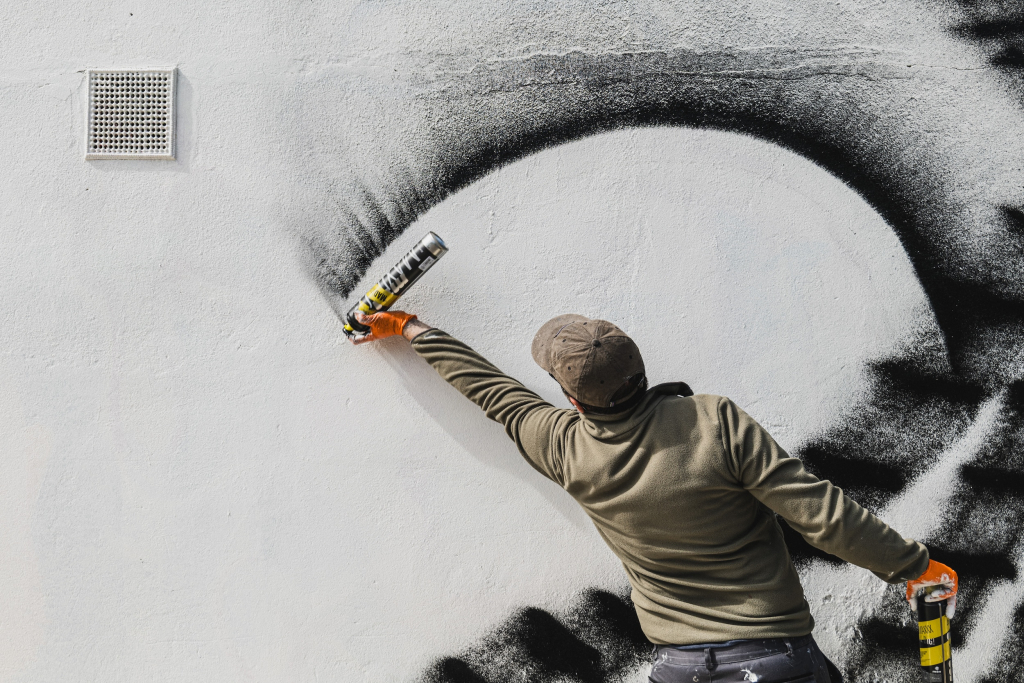

Image Credits
- Featured image: Ostend western jetty — Photo by Marc Ryckaert (MJJR), CC BY 3.0, Wikimedia Commons.
- Wall art by Kymo One — Photo by CalvinBall, CC0, Wikimedia Commons.
- Mural Swing by Bozko — Photo by Miguel Discart, CC BY-SA 2.0, Wikimedia Commons.
- Mural in Brussels — Photo by Karmakolle, CC0, Wikimedia Commons.
- Fresh Paint festival mural, Ottignies — Photo by EmDee, CC BY-SA 4.0, Wikimedia Commons.

